

Empowering Caribbean and Central American Educators: What 2026 Workshop Polls Reveal About Teacher Efficacy
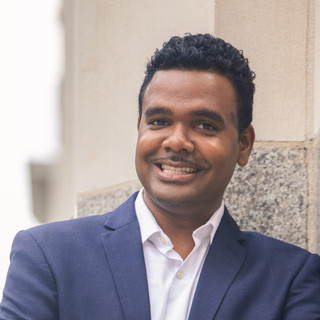
By Dr. Dwayne Dyce, Founder and CEO, Education Solutions International (ESI)

Executive Summary
When I asked approximately 110 educators from over 17 countries what can raise student achievement, 63% of poll respondents strongly agreed that the collective effort of faculty and staff can, but only 25% felt the same about overcoming the external challenges students face. Teachers across the Caribbean and Central America are telling us that their shared work inside the school is where they feel most powerful. What they say they need next is support for learners with additional needs, stronger collaboration and workable intervention systems.
In this article I share the poll and survey data, explain why I think these patterns exist, and set out what ministries, school leaders and teachers can do with them.
Why We Talked About Teacher Efficacy
The objective
Education Solutions International (ESI) runs at least 2 professional development workshops every month from September to May of each school year. In October 2026, I chose teacher efficacy because the research ranks it among the strongest influences on student achievement, and because it is something schools can build without new budgets. The session, “From ‘I’ to ‘We’: Activating Personal and Collective Teacher Efficacy,” asked educators to move from “Can I reach this student?” to “Can we, together, make a difference?”
Teacher efficacy is a teacher’s belief in their ability to produce the outcomes they want for students. Drawing on Albert Bandura’s social cognitive theory, we looked at it through three lenses:
Lens | What it means | In the classroom |
Personal teaching efficacy | Belief in my own ability to help students learn | Confidence in reaching a struggling or unmotivated student |
General teaching efficacy | Belief that the profession can overcome outside factors such as poverty or home circumstances | Whether we expect school to change a student's trajectory |
Collective efficacy | A shared belief among faculty and staff that our combined efforts can raise achievement | Whether a whole staff owns student outcomes together |
Who took part
Approximately 110 educators from more than 17 countries across the Caribbean and Central America joined the session, responding to live Zoom polls, contributing in the chat and sharing experiences from their own schools. Afterwards, roughly 60% of them completed an end-of-workshop survey on their experience and the professional development they need next. About 60% of respondents were classroom teachers, roughly 27% were principals, vice principals or other school heads, and the rest were coaches, grade coordinators and ministry officials.

What the Data Says
I grouped the results into three themes: where educators feel strongest, what stands in their way, and what they need next. The four poll questions below frame the rest.
Poll question | Result |
Collective faculty and staff efforts can raise student achievement (strongly agree) | 63% |
Teachers can overcome the external challenges students face (strongly agree) | 25% |
Best first step for building collective efficacy: pick one skill, bring student work and plan a lesson together | 86% |
End-of-session rating, 1 to 10: faculty working together can raise student achievement (chose 10) | 82% |
The final poll used a 1 to 10 scale rather than “strongly agree,” so it is not directly comparable with the first.

Theme 1: Regional strengths
Educators in this group are confident in what they can do together, and they learn well from one another.
Confidence in collective effort. Beyond the 63% who strongly agreed that shared effort can raise achievement, 82% chose the top rating of 10 on a related 1-to-10 question by the end of the session.
A practical instinct for collaboration. Offered four ways to build collective efficacy, 86% chose the one built on shared evidence and a shared goal. That matches two things the research links to strong collective efficacy: goal consensus and evidence-based practice.
Responsive leadership. Of the six enabling conditions I describe in the discussion below, responsiveness of leadership was the one participants most often named as their school's strongest.
Learning from peers. Asked which source of efficacy produced their strongest moments of confidence, the most common answer was vicarious experience: seeing colleagues succeed.
Commitment to students. One teacher described joining the profession without formal qualifications and reaching a non-verbal student through oral questioning and simplified explanations, after the student had been placed in special needs classes. Another described a student labeled negatively because of his appearance who excelled in home economics.
One survey respondent summed up what many felt: the most valuable lesson was “learning that many teachers across the region are going through the same challenges.”
Theme 2: Shared systemic barriers
The obstacles participants named sit mostly in how schools and systems are organized, not in any lack of commitment.
A ceiling on what feels possible. Only 25% strongly agreed that teachers can overcome the external challenges students face, 38 points below their belief in collective effort.
Cohesion and trust. Cohesive staff was the condition most often named as weakest. Participants described divided staff and low trust, including in schools with open-door policies. One teacher said their school did not rate any of the six conditions as a strength.
Intervention systems that arrive late. Participants described bureaucratic processes and slow timing of support for struggling students. One participant’s school had managed to identify students’ intervention needs despite the hurdles, which shows it can be done.
A preparation gap. Educators called for better training in supporting students with special needs and social-emotional needs, in both teacher education programs and schools. Others said motivating disengaged students is hard without strong backing from school leadership.
Burnout. As one respondent put it: “A teacher that is burned out cannot make a great impact on their learners.”
Training not built for the region. One respondent observed that workshops on managing difficult learners are plentiful but rarely designed around the Caribbean experience.
Theme 3: Professional development needs
About two-thirds (66%) of survey respondents named a topic they want more learning on, and the largest group asked for help supporting learners with additional needs.

Behind the themes are specific requests:
Supporting diverse learners: special education, autism, learning disabilities and differentiation, including one request for “differentiated instruction in the typical Caribbean classroom.”
Efficacy, taken further: the six enabling conditions, advanced teacher influence, intervention systems, Bandura’s work and the zone of proximal development.
Instruction and curriculum: AI in teaching and learning, lesson planning, literacy, assessment and appraisal, and sample lessons. One primary teacher asked for help with Grade 6 students who struggle with addition and subtraction involving renaming.
Collaboration, culture and morale: getting teachers with different personalities to collaborate, improving staff communication and morale, and building partnerships with parents and school management.
Classroom management, school leadership and teacher wellbeing: between 7% and 9% of requests each, with stress management and work-life balance named alongside leadership.
Participants also told us how the session itself landed.
Survey question (scale of 1 to 10) | Average | Scored 9 or 10 | Scored 10 |
Overall quality of the workshop | 9.5 | 90% | 64% |
Learned something new | 9.3 | 82% | 67% |
Would recommend this type of workshop to colleagues | 9.8 | 94% | 87% |
Why These Patterns Exist
Poll data cannot prove causes, so what follows is my reading of the numbers alongside the research and what we know about the region.

Why belief in “we” outruns belief in overcoming outside factors
Teachers cannot change a student’s home or neighborhood. They do shape what happens in shared planning, instruction and support, and the research suggests that is where much of the leverage sits. John Hattie’s Visible Learning work reported collective teacher efficacy at an effect size of 1.57, the highest of more than 250 influences on achievement (Visible Learning). Donohoo, Hattie and Eells reported that its influence exceeds that of socioeconomic status, home environment and parental involvement (ASCD).
That headline figure is debated. Critics note that much of the evidence is correlational, and Hattie’s own organization has since published a lower figure of about 1.39 as of 2019 (Corwin Visible Learning). Some researchers also argue that success may build collective efficacy as much as the reverse. I read that as a reason to build both together. It may also help explain the gap in our poll: participants may be sensing where their influence is greatest. As one put it, “As teachers we often try to do things on our own without input of others,” and “the student’s environment should not be used as a limitation to what we can help them to achieve.”
Why exam pressure and teacher turnover make “we” harder
CSEC and CXC results shape how teachers across the region feel judged. In 2025 the regional average CSEC pass rate was 39% in Mathematics against 80% in English A, according to figures reported by Jamaica’s Ministry of Education. Gaps like that rarely begin in fifth form. A Grade 6 teacher in our survey asked for help with students who struggle with addition and subtraction involving renaming. No single teacher closes that kind of gap alone, because the foundations are built across many grades. That is collective efficacy in practical terms: it takes a staff that shares goals and knows one another’s work.
Turnover makes that harder. Professor S. Joel Warrican of the Caribbean Educational Research Centre has warned that experienced teachers are leaving the region’s classrooms and that ministries are filling vacancies with untrained teachers (Barbados Today). Constant change in staff is likely to weaken cohesion and shared knowledge of practice, and it raises the stakes of peer learning. One teacher in our session described starting without formal qualifications and reaching a non-verbal student through oral questioning and simplified explanations. The student had been placed in special needs classes because of staff disagreements, not ability. Their story shows both what a determined teacher can do, and what is lost when a staff is divided.
Why support for additional needs tops the list
In a 2000 UNESCO monograph on the Commonwealth Caribbean, Sijtze Bergsma argued that inclusive education is feasible only if a support and resource system is in place for primary schools (UWI). Our participants’ requests, for training on special education, autism, learning disabilities and differentiation, suggest that classroom teachers may still be carrying inclusion without enough of that support. It matters for efficacy, too. Bandura’s strongest source of efficacy is mastery experience, or success, and a teacher without strategies for a struggling learner cannot easily build the successes that confidence depends on.
Where confidence comes from: Bandura’s four sources
Source | What it is | What it can look like in a school |
Mastery experiences | Succeeding at a demanding task | A team reviews student work after a lesson that worked and names why |
Vicarious experiences | Seeing a credible peer succeed | Teachers observe a colleague’s class or visit another school |
Social persuasion | Credible encouragement and feedback | A principal or coach gives specific, honest feedback |
Emotional reframing | Reading stress as manageable, not as proof of inability | A staff treats a hard term as a problem to solve together |
Mastery experiences are usually described as the most powerful source (NSF Public Access review). Yet participants most often named vicarious experience, and that is good news for resource-constrained systems. Peer observation, school visits and shared lesson study cost little and draw directly on it.
The six conditions, and what our participants signaled
Jenni Donohoo describes six school conditions that make collective efficacy more likely: teacher influence in decisions, goal consensus, teachers’ knowledge of one another’s work, a cohesive staff, responsive leadership and effective intervention systems (Donohoo, 2017). Our participants named responsive leadership as the most common strength and cohesion as the most common weakness, with intervention systems raised repeatedly as a concern.
That pairing is instructive. Supportive leaders alone do not produce a united staff. One secondary school leader described an open-door policy and a system of rewards and sanctions, yet named trust as a significant challenge. Cohesion tends to grow from the other conditions: agreeing on a goal and seeing one another’s practice up close. A survey respondent said it plainly: “Training alone cannot improve efficacy. Collaboration can improve efficacy.” Another asked leaders for the first condition: “Principals need to give teachers a real voice in decisions.”

Recommendations: How to Use This Data
Each recommendation below traces back to a finding above.
For ministries and policymakers
Protect time for collaboration. Collaboration was among the things participants most often said they valued, and 86% chose shared lesson planning as their first step. Build regular, protected time for teachers to plan together and review student work into school timetables and appraisal expectations.
Invest in training for diverse learners. Supporting learners with additional needs was the top professional development request, at 25% of topic requests. Prioritize special education, differentiation and social-emotional support in both initial teacher education and ongoing development, alongside the support systems inclusion depends on.
Shorten the intervention pathway. Participants described bureaucracy and slow timing. Publish clear, time-bound steps from identifying a struggling student to delivering support.
Commission Caribbean-grounded professional development. Fund sessions that use regional case studies, especially on managing difficult learners in the region’s most challenging schools.
Pair new and untrained teachers with experienced mentors. Peer observation draws on the source of efficacy participants valued most, and it cushions the effect of turnover.
For school leaders: what you can do tomorrow
Ask each team to pick one skill. Have teams bring student work and plan a lesson together this week. It was the first step 86% of participants chose.
Give teachers a real voice. Put one real school decision to your staff before you make it.
Build trust on purpose. Pair your open door with structured conversations about practice. One respondent’s takeaway is a good place to start: take time out to check in on at least one coworker.
Map the intervention pathway. Walk one struggling student’s journey with your team and remove the steps that delay help.
Run the six-condition check-in. Ask each person to name the school’s strongest and weakest condition, then choose one to work on together.
Guard against burnout. Protect teaching time and treat teacher wellbeing as part of student learning.
For teachers: advice from peers
Start small and shared. Choose one skill, bring one piece of real student work to a colleague and plan a lesson together.
Name what worked. After a lesson goes well, say why. Success builds efficacy only when you notice it.
Watch a colleague teach. Visit a classroom, or invite someone into yours.
Control what you can. Your methods, your attitude, your emotional responses and your relationship with each student.
Look beyond one trait. A student judged on appearance can excel in another class. Find where each one shines.
Treat stress as information. One participant took away that stress can be read as workable information rather than a verdict on your ability.
From “I” to “We”
The educators who joined us were clear about where their power lies: 63% strongly agreed that collective effort can raise student achievement, and by the end of the session 82% gave that belief the top rating. They were equally clear about what stands in the way, from divided staff and slow intervention systems to limited preparation for learners with additional needs. And 94% of survey respondents scored their likelihood of recommending this kind of workshop at 9 or 10, which tells me the appetite for learning together is strong.
The move from “I” to “We” does not require new budgets. It begins with a colleague, a piece of student work and a shared lesson plan.
Join us
ESI offers a professional development workshop every month. In November 2026, we are offering workshops on classroom management and teaching students with learning disabilities. Survey respondents also asked for sessions on supporting learners with additional needs, differentiated instruction and deeper work on the six enabling conditions. I invite educators across the Caribbean and Central America to join us, and to become members of Education Solutions International. ESI has a school membership option for a school’s individualized PD focus.
Sources and Further Reading
Hattie, J. Collective Teacher Efficacy (CTE) according to John Hattie. Visible Learning.
Corwin Visible Learning. What is the evidence for the 1.57 effect size for collective teacher efficacy?
Donohoo, J., Hattie, J., & Eells, R. (2018). The Power of Collective Efficacy. Educational Leadership, 75(6).
Donohoo, J. (2017). Collective Teacher Efficacy: The Effect Size, Research, and Six Enabling Conditions. Also: Collective Efficacy: How Educators' Beliefs Impact Student Learning (Corwin).
Goddard, R., Hoy, W., & Woolfolk Hoy, A. (2000). Collective teacher efficacy: Its meaning, measure, and impact on student achievement. American Educational Research Journal, 37(2).
Tschannen-Moran, M., & Barr, M. (2004). Fostering student achievement: The relationship between collective teacher efficacy and student achievement. Leadership and Policy in Schools, 3(3).
Bandura, A. (1997). Self-efficacy: The exercise of control. Freeman. See also this NSF Public Access review of teacher self-efficacy sources.
Jamaica Information Service (2025). Improved performance in 2025 CSEC English and Maths.
Barbados Today (2025). Teacher exodus threatens education standards, expert says.
Bergsma, S. (2000). The regular classroom as battleground for inclusive special needs education in the Commonwealth Caribbean. UNESCO Office for the Caribbean.
Workshop data: ESI workshop “From ‘I’ to ‘We’: Activating Personal and Collective Teacher Efficacy,” October 2026 (Zoom polls and discussion), and ESI End of Workshop Survey, Oct. 28, 2026. Participant names and identifying details have been removed. Survey quotes are lightly edited for spelling and punctuation.
Dr. Dwayne Dyce is Founder & CEO of Education Solutions International (ESI). ESI has been in existence since 2022, offering free and low-cost professional development, leadership training, mentorship, coaching, and retreats to schools and school systems across the Caribbean and Central American regions. ESI has a global presence and continues to increase its work to empower school leaders and learner


Comments